
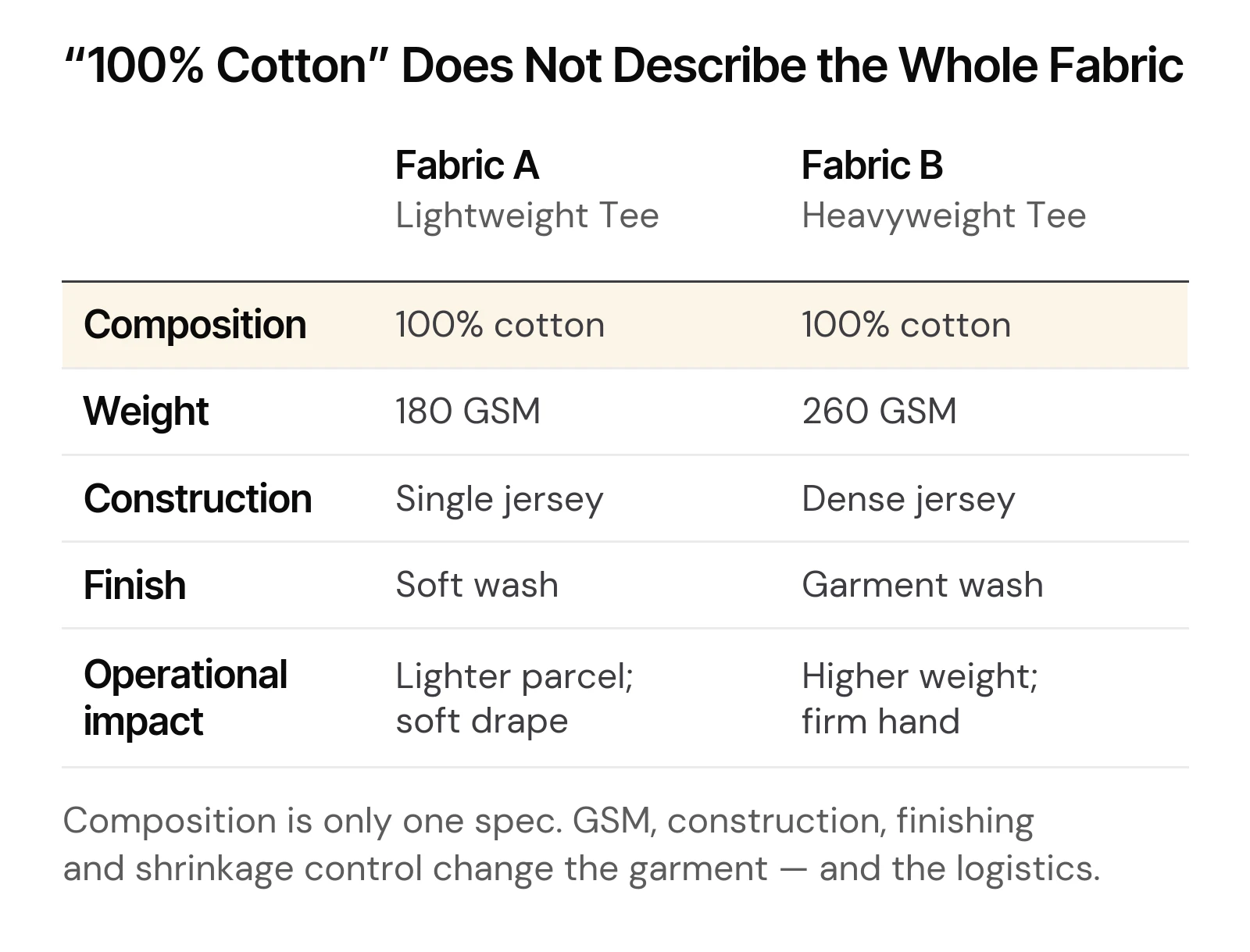
Two fabrics can both be labeled 100% cotton and still produce completely different T-shirts. One feels crisp and structured. Another drapes softly. One shrinks after three washes. Another holds its shape. One makes a 220-gram parcel; another pushes the same garment into a more expensive shipping weight band.
That is why fabric sourcing in China is not simply a matter of finding a textile supplier and choosing a color. For a fashion brand, the fabric decision affects garment feel, fit, MOQ, cost, production consistency, QC, packaging, shipping, returns, and how quickly a winning style can be replenished.
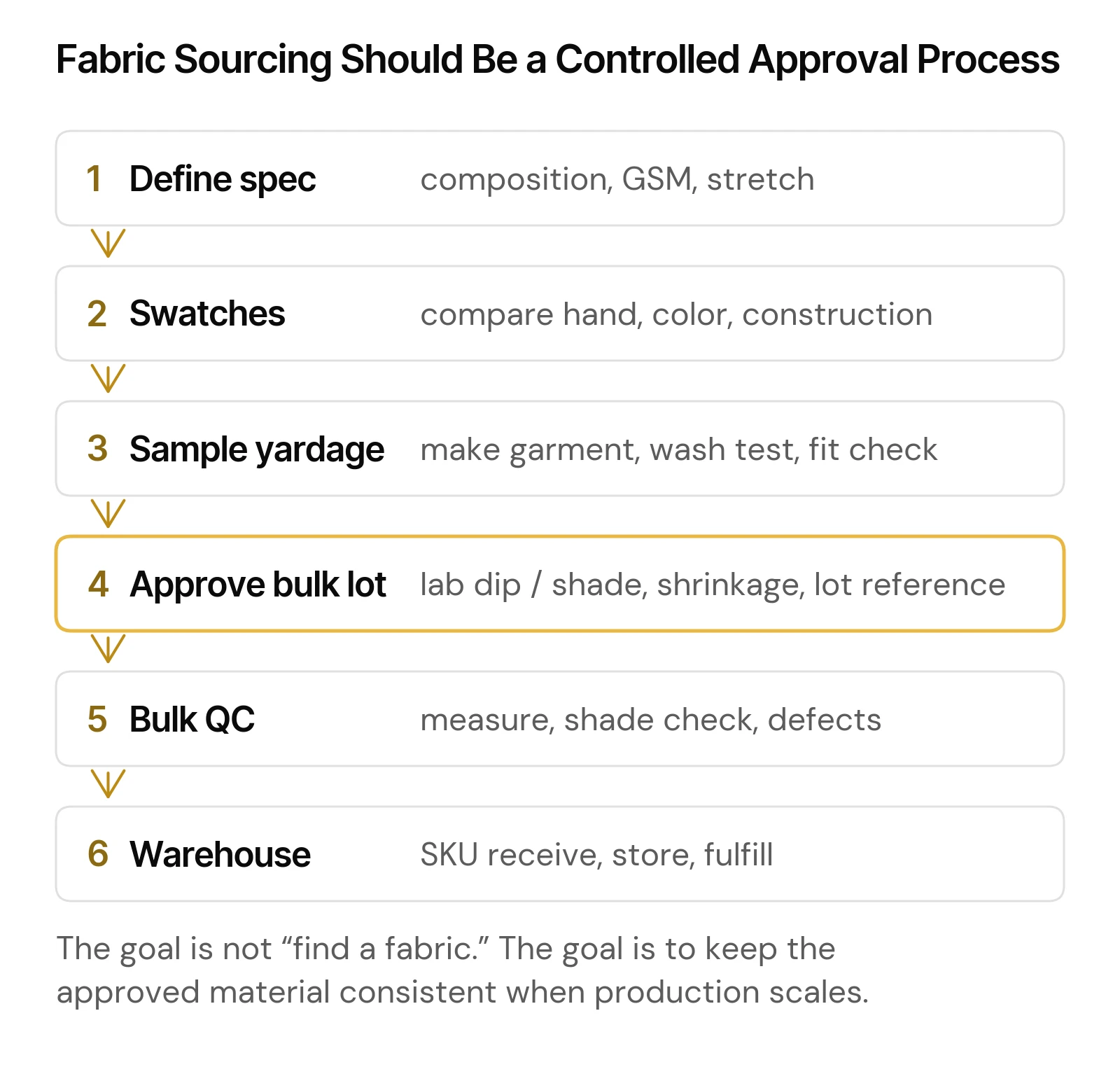
The safest process is to turn fabric sourcing into an approval system: define the specification, compare swatches, test sample yardage, approve the bulk lot, then keep that approved standard visible through production and QC. The material is not finished when the mill ships it. It is finished when the customer receives the same garment you approved.
Quick Answer
- Do not source by composition alone. GSM, knit or weave, yarn, stretch, finishing, shrinkage and dye lot can change the final garment dramatically.
- Fabric MOQ and garment MOQ are different. A factory may accept 200 finished pieces while the mill still requires a much larger fabric commitment.
- Approve sample yardage and the production fabric separately. A perfect sample does not guarantee the bulk roll will match it.
- Certifications such as OEKO-TEX STANDARD 100 or Better Cotton traceability answer specific safety or chain-of-custody questions; they do not prove the fabric will fit, drape or wash the way your design requires.
- For brands manufacturing in China, keeping sourcing, production, QC and fulfillment close together makes material problems easier to catch before inventory moves overseas.
Why Fabric Choice Changes More Than the Look of a Garment
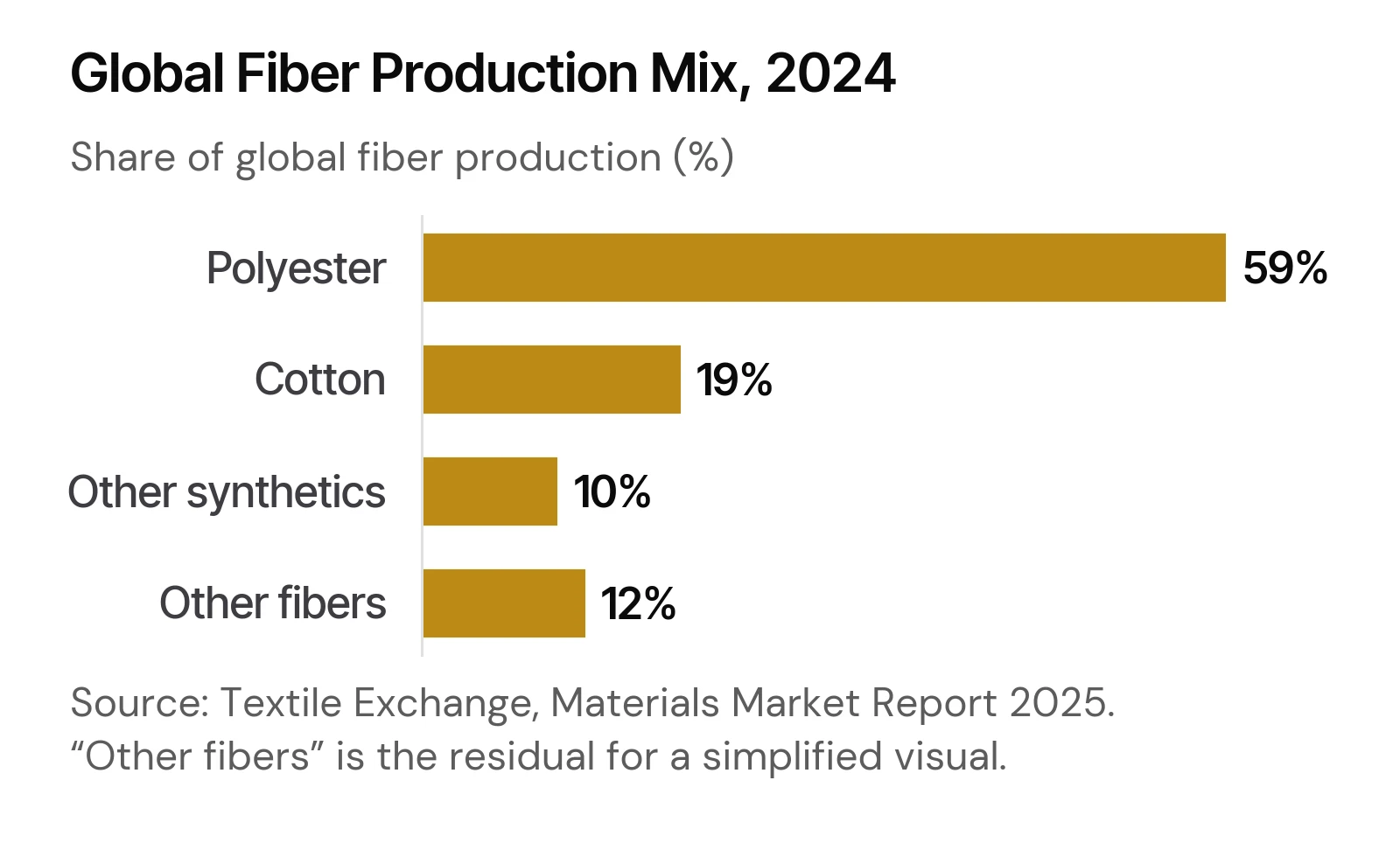
Textile Exchange’s Materials Market Report 2025 reports that global fiber production reached about 132 million tonnes in 2024. Polyester represented roughly 59% of total output, while cotton accounted for about 19%. That scale is why “cotton” or “polyester” is only the beginning of a useful specification.
A 180 GSM cotton single jersey and a 260 GSM dense jersey can share the same composition but behave differently in cutting, washing, fit and shipping. Stretch, brushing and garment washing can change the result again.
Heavier fabric also means heavier finished goods, which can change carton weight, parcel cost and storage density. A swatch-table decision can reappear months later in the fulfillment invoice.
The Fabric Specification Fashion Founders Should Actually Approve
A useful fabric approval sheet should describe what the material must do, not only what it is called:
This is where a sourcing partner that understands the full fashion chain becomes more useful than a directory of factories. Silk Road’s fashion sourcing and supply-chain services connect factory sourcing, tech-pack review, sample management, MOQ negotiation and QC with the fulfillment operation in Shenzhen.
Fabric MOQ Is Not the Same as Garment MOQ
Garment factories and fabric mills often work with different minimums. A factory may accept 200 T-shirts while a custom-dyed fabric requires far more yardage, leaving the brand to buy excess material or switch to stock fabric.
Color makes this harder. Mills may apply minimums by color or dye lot, so 600 units split across four colors can be harder to source than 1,000 units in one color.
The practical response is to solve the material MOQ before committing to the full garment assortment. Silk Road’s value-added sourcing and QC support can sit alongside fulfillment so fabric, packaging and production decisions are handled before they become warehouse problems.
Why Sample Fabric and Bulk Fabric Can Still Be Different
A sample can be perfect while bulk fabric still changes. New dye lots, fresh knitting runs, finishing or machine settings can shift shade, width, shrinkage and hand feel.
Use a controlled approval sequence: swatch → sample yardage → finished sample → approved bulk reference → bulk check. Without a recorded material standard, a technically “similar” substitute can still look visibly different.
This is closely connected to garment inspection. Silk Road’s fashion fulfillment operation is designed around size, color and style-level accuracy, while its Shenzhen supply-chain workflow keeps QC close to factories before goods are committed to international fulfillment.
What Certifications Tell You - and What They Do Not
OEKO-TEX STANDARD 100 is a product-safety standard for textiles tested for harmful substances. OEKO-TEX states that every thread, button and accessory of a certified article is tested against a list of more than 1,000 harmful substances. That supports chemical-safety claims, but it does not prove shrinkage, shade consistency or stretch recovery.
Cotton sourcing has a similar distinction. Better Cotton traceability can provide country-of-origin and route-to-market information for Physical Better Cotton through its chain-of-custody system. That is traceability evidence, not a substitute for checking GSM, shade, shrinkage or sewing performance.
For brands selling into Europe, material choices also sit inside a broader policy direction. The European Commission’s Strategy for Sustainable and Circular Textiles sets a 2030 vision in which textiles placed on the EU market are durable, repairable, recyclable, largely made with recycled fibers and free of hazardous substances. Material data and traceability are therefore becoming more commercially relevant.
How to Evaluate a Fabric Supplier in China
A good supplier is the one that can repeatedly deliver the agreed specification. Test the process, not only the first swatch.
Ask for a complete spec. Composition, GSM, width, construction, finish, stretch and available test data should be written down.
Order sample yardage. A small swatch tells you hand feel; sample yardage tells you how the material cuts, sews, washes and behaves as a garment.
Wash the finished sample. Measure before and after washing. A fabric that looks excellent on day one can create returns if the garment changes after care.
Approve color properly. Use a physical approved reference or lab dip where relevant and confirm how bulk shade variation will be controlled.
Clarify the bulk lot. Ask whether the production fabric is from the same mill, construction and finishing process as the approved sample.
Keep the approved reference. Your factory, QC team and warehouse should know what “correct” looks like when the bulk goods arrive.
A Fabric Decision Changes the Whole Supply Chain
| Fabric decision | What the founder notices | Operational impact |
|---|---|---|
| GSM | Thickness and structure | Garment weight, cutting yield, parcel cost |
| Composition | Hand feel and performance | Care, cost, claims, supplier choice |
| Stretch / recovery | Fit and comfort | Sizing consistency and returns |
| Dye lot | Color match | Shade consistency across units |
| Shrinkage | Fit after washing | Customer complaints and exchanges |
| Fabric MOQ | How much must be bought | Cash tied in raw material |
| Certification | Safety or sourcing evidence | Verification and market claims |
For brands already manufacturing in China, the warehouse can also be part of the control loop. Silk Road’s Shenzhen fulfillment center sits close to factories, packaging suppliers and QC work, while its order fulfillment process takes over once approved production becomes sellable inventory.
Frequently Asked Questions
What does GSM mean in fabric sourcing?
GSM means grams per square meter and is a common way to express fabric weight. Higher GSM usually means a heavier fabric, but GSM alone does not define quality. Construction, yarn, finishing and fiber blend also affect how the material feels and performs.
Can two 100% cotton fabrics be different quality?
Yes. Two fabrics with the same fiber composition can differ in yarn quality, GSM, knitting or weaving density, finishing, shrinkage, colorfastness and hand feel. A useful specification must go beyond composition.
What is a normal fabric MOQ in China?
There is no single normal MOQ. Stock fabrics can be available in small quantities, while custom colors, custom knitting or custom finishing can require much larger commitments. Confirm the mill MOQ by fabric and color before finalizing the garment order.
Does OEKO-TEX certification mean the fabric is high quality?
Not by itself. STANDARD 100 addresses testing for harmful substances. It does not certify fit, drape, shrinkage, pilling, shade consistency or whether the fabric matches your approved sample. Those still require product-specific testing and QC.
Choose the Material Like an Operator, Not Just a Designer
The right fabric has to survive sampling, production, washing, QC, shipping and the customer’s first wear. For fashion brands sourcing in China, document the standard early, test it in a finished garment and control the bulk lot. Get the fabric decision right and everything downstream becomes easier: margin is clearer, production is more repeatable and the customer receives the product the brand actually designed.