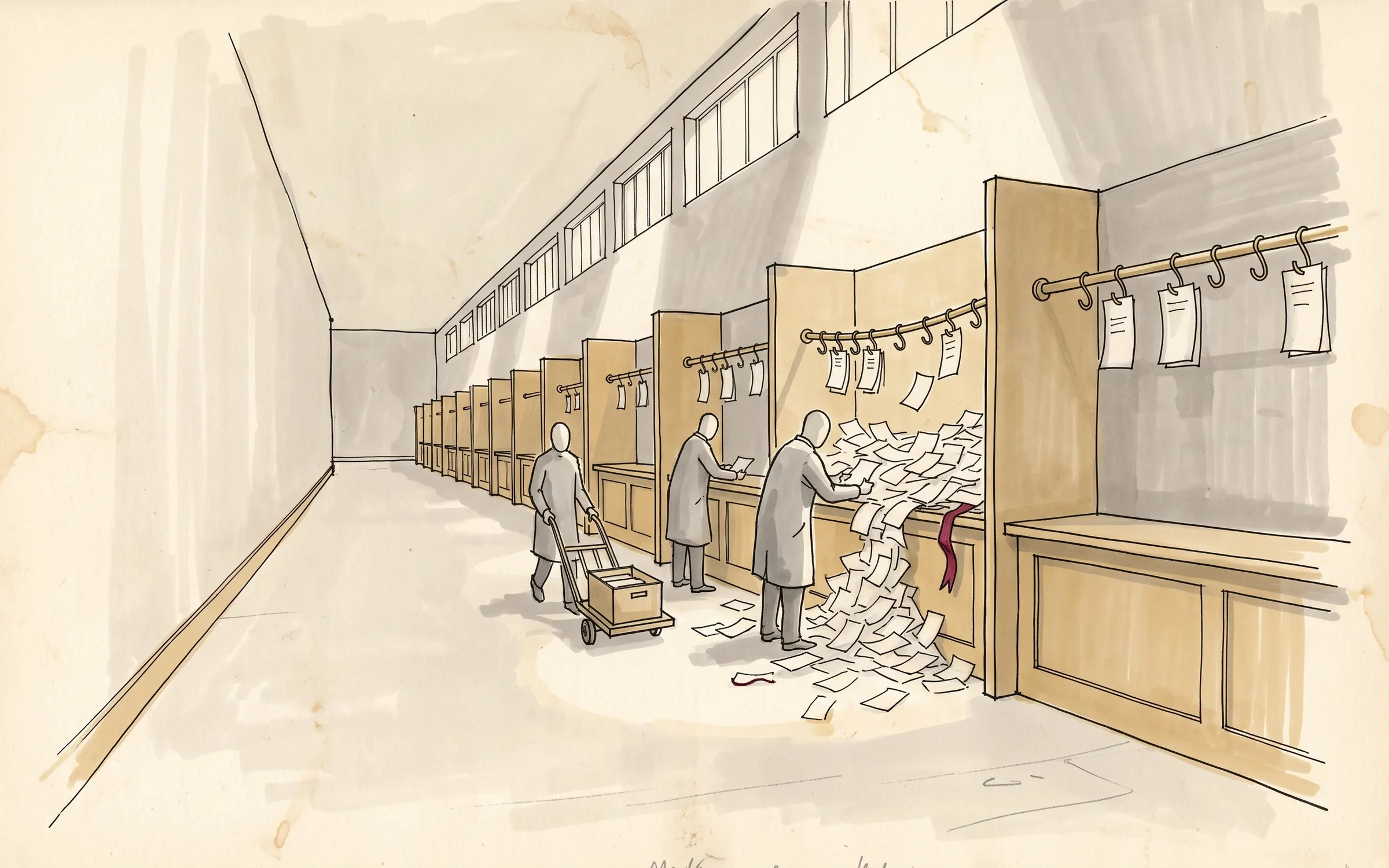
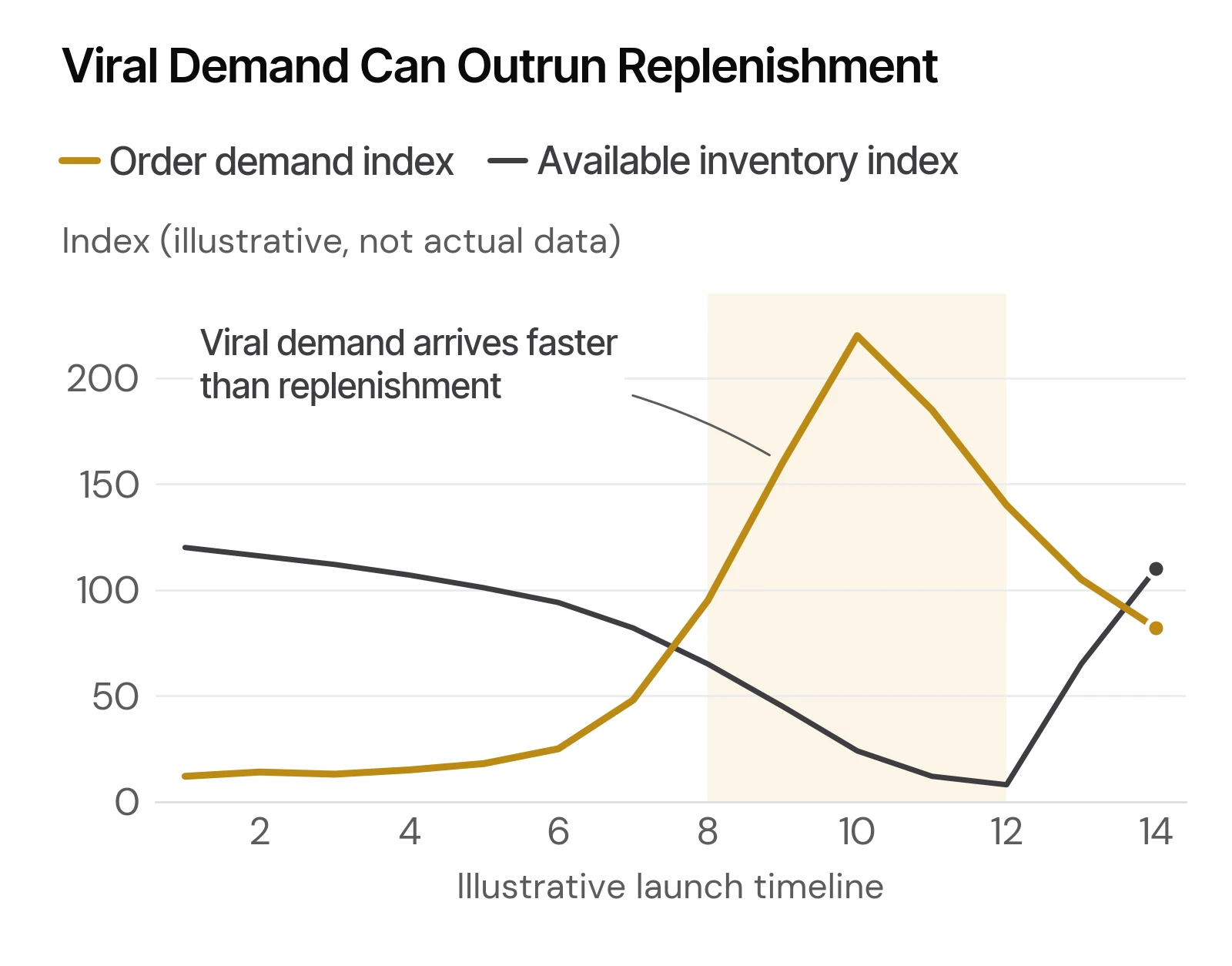
A fashion brand can go from 20 orders a day to hundreds because one creator video catches fire. The warehouse problem starts a few minutes later. The viral post may feature one hoodie, but the operation sees five sizes, four colors, multiple sales channels, and a stock count that is changing faster than yesterday’s forecast.
That is why TikTok Shop fulfillment for fashion brands is not mainly about shipping faster. It is about keeping inventory accurate while demand becomes unpredictable. A viral spike can empty Black Medium while Green XL barely moves, and a brand that responds by over-ordering the whole style can turn one successful video into months of dead stock.
The better approach is to connect TikTok Shop, Shopify, the warehouse, and replenishment decisions at the variant level. Keep uncertain inventory flexible, move proven winners closer to demand when the numbers justify it, and build a fulfillment system that can absorb a spike without making a permanent inventory bet.
Quick Answer
- TikTok demand can change faster than production and replenishment, so accurate real-time inventory matters more than a large total stock number.
- Fashion brands should forecast at the variant level: style × color × size, not only by product name.
- New drops and unproven variants often make sense in one central inventory pool close to production.
- Proven TikTok bestsellers can later move into regional warehouses if local order density and delivery expectations justify it.
- Shopify can sync catalog, inventory, fulfillment, and orders with TikTok Shop, which reduces manual inventory drift when the channel is configured correctly.
Why TikTok Shop Creates a Different Fulfillment Problem
Social commerce is now a real sales channel, not only a discovery channel. DHL’s 2026 E-Commerce Trends Report says 63% of ecommerce businesses sell on social platforms while 45% of shoppers buy through them. Shopify’s 2026 fashion ecommerce analysis also lists social commerce and shoppable content among the major trends shaping fashion ecommerce.
The operational difference is speed of demand formation. A traditional product launch may build over email, paid ads, and repeat traffic. TikTok can compress discovery, proof, and purchase into the same short window. A creator wears a jacket, viewers ask where it is from, the product becomes shoppable, and a warehouse that expected a normal Tuesday suddenly has a launch-day workload.
The problem is not simply order volume. Fashion orders contain variants. When a video sends demand toward one exact color and size, the brand can technically have plenty of inventory while still being unable to fulfill the product customers are trying to buy.
The Real Risk Is Stocking the Wrong Variants
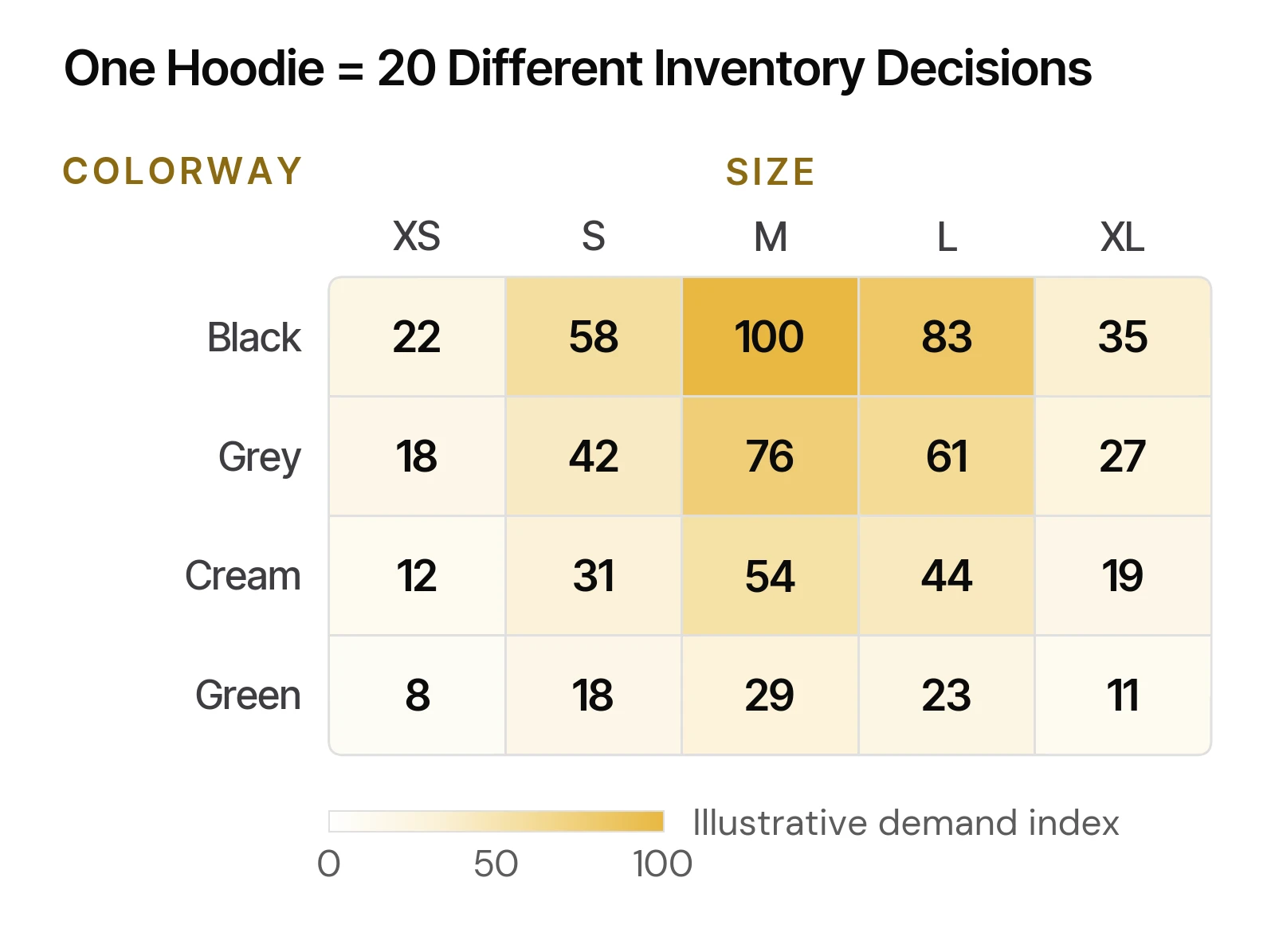
Take one hoodie in four colors and five sizes. That is 20 SKUs before adding a second fit, wash, graphic, or bundle. If Black Medium sells six times faster than Green XL, buying another 500 hoodies does not automatically solve the stockout. The brand has to reorder the right mix.
This is where a fashion-focused warehouse differs from a generic ecommerce operation. Silk Road’s fashion fulfillment model tracks inventory by style, color, and size rather than hiding every variant under one product-level number.
For TikTok-led demand, that detail matters because creators rarely generate evenly distributed demand. One colorway may appear better on camera. A certain size may dominate because of the creator’s audience. A bundle may suddenly outperform the single item. The operational question is not “how much stock do we have?” It is “which exact variant is disappearing, and what will run out next?”
Connect TikTok Shop, Shopify, and the Warehouse Before You Scale
Shopify’s TikTok Shop setup documentation confirms that merchants can sync catalog, inventory, fulfillment, and orders between Shopify and TikTok Shop. That connection matters because two channels selling the same last unit should not each believe they own it.
For a fashion founder, this is one of the first systems to fix before increasing creator spend. Orders should enter the fulfillment operation automatically, inventory should reduce as units ship, and tracking should return to the selling channel. If someone is exporting TikTok orders to a spreadsheet and then updating Shopify inventory by hand, the system is already too fragile for a viral day.
Silk Road’s Shopify fulfillment integration is built around the same principle: products and variants sync, orders flow to the warehouse, stock updates, and tracking is written back. The broader order fulfillment workflow keeps one inventory pool across Shopify, TikTok Shop, marketplaces, and other channels.
How to Handle Viral Demand Without Overstocking
1. Separate proven demand from viral noise. A video spike is information, not a permanent forecast. Measure whether orders continue after the content peak and whether the same SKU wins across multiple creators or campaigns.
2. Replenish the winner, not the whole style. If Black M and Black L are driving the stockout, do not automatically reorder every color and size in the original production ratio.
3. Keep long-tail variants flexible. Slow sizes and experimental colorways should not be duplicated across multiple warehouses until demand proves they deserve the extra stock position.
4. Build a fast factory-to-warehouse loop. For brands producing in China, replenishment becomes easier when the factory, QC, packaging, and fulfillment team are inside the same supply chain.
5. Prepare fulfillment capacity before the next creator push. A marketing calendar should reach the warehouse. If ten creators post on Friday, the fulfillment team should know before the orders arrive.
Value-added work also becomes important when TikTok demand includes bundles, creator inserts, special packaging, or launch kits. Silk Road’s value-added services cover packaging, kitting, QC, sourcing support, and SKU-level inventory management.
Should TikTok Fashion Brands Fulfill From China or the US?
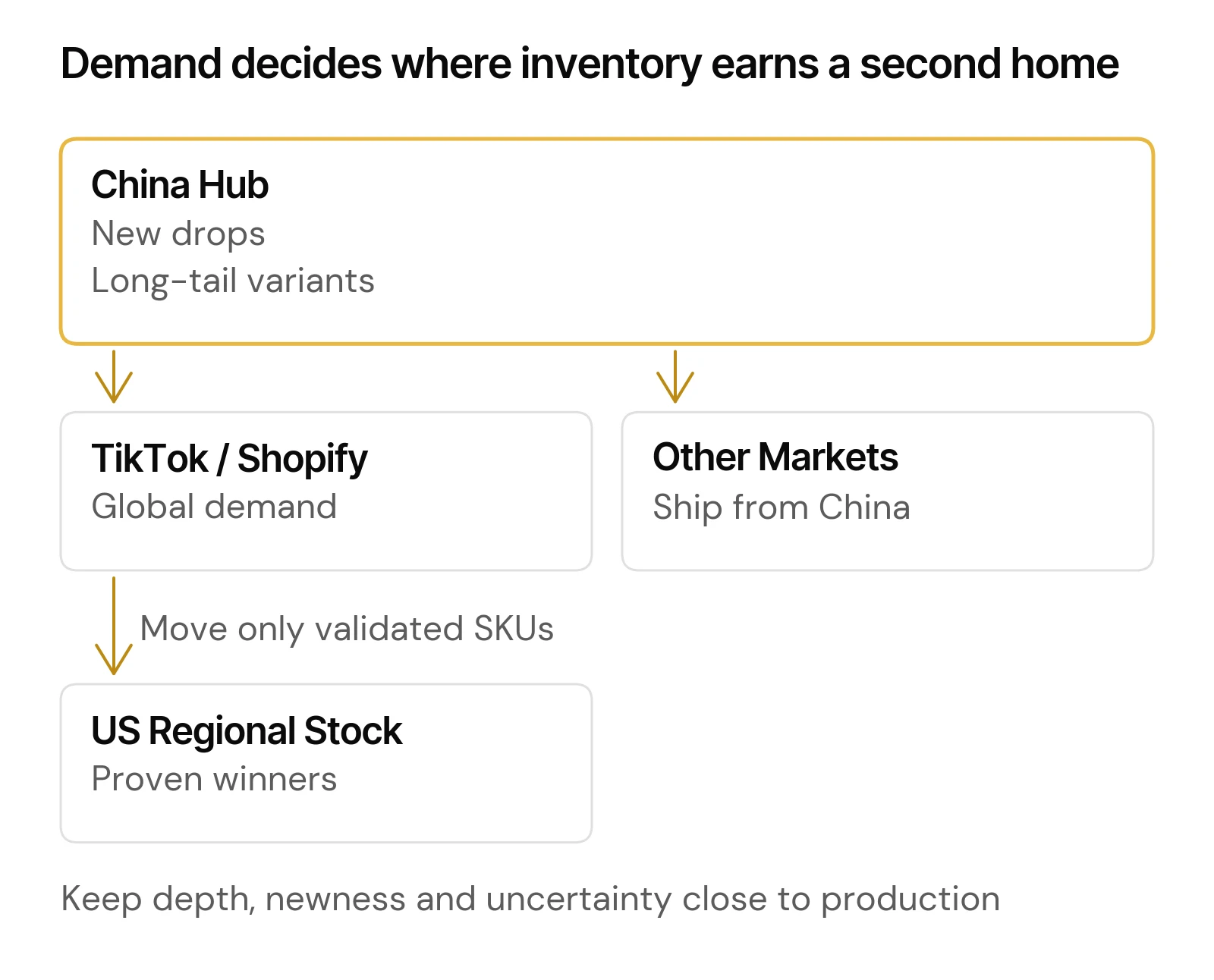
There is no single correct warehouse for every TikTok brand. New collections, uncertain winners, and deep size/color ranges often benefit from staying in one inventory pool close to production. Proven US bestsellers can make more sense in a US warehouse once weekly demand becomes predictable.
Silk Road’s global fulfillment-center strategy follows that product-by-product logic: Shenzhen acts as the primary hub, while selected inventory can move to the United States, Europe, or Australia when regional volume justifies it.
| SKU type | Best starting position | Why |
|---|---|---|
| New TikTok drop | China hub | Demand pattern is not proven yet. |
| Untested colorway | China hub | Avoid duplicating uncertain stock. |
| Long-tail sizes | China hub | Keep depth without regional fragmentation. |
| Repeat viral bestseller | Hybrid / regional | Local stock can improve speed where demand is predictable. |
| Evergreen US core SKU | US + China backup | Domestic fulfillment for velocity; China keeps replenishment flexibility. |
A Hybrid Model Often Fits Social-Commerce Fashion Best
A hybrid model avoids the two extreme mistakes: shipping every order internationally forever, or moving the full catalog overseas before the brand knows what actually sells. Instead, China holds the depth, newness, and uncertain variants. Regional warehouses hold the products that have earned a local inventory position through repeat demand.
This is especially useful for fashion because the long tail is large. A brand may have ten hero SKUs driving most US TikTok sales and another 150 variants that sell occasionally across the US, Europe, Australia, and the Middle East. Duplicating all 160 SKUs in every region increases storage, safety stock, transfers, and dead-stock risk. Moving only the proven winners keeps the customer-speed benefit without copying the whole catalog.
What a TikTok Shop 3PL Should Be Able to Handle
A TikTok Shop 3PL for fashion needs more than shelves and postage. The operation should be able to manage variant-level inventory, multiple sales channels, launch spikes, QC, branded packaging, returns, and replenishment communication. Silk Road’s broader fashion 3PL services connect fulfillment with sourcing and supply-chain work in Shenzhen.
Ask a potential partner how they handle a sudden 5× order day, how quickly inventory updates across channels, whether they can identify low stock by size and color, how they receive replenishment from a factory, and what happens when packaging changes for a creator campaign. Those answers reveal more than a generic pick-and-pack price sheet.
Frequently Asked Questions
What is TikTok Shop fulfillment?
TikTok Shop fulfillment is the process of receiving, storing, picking, packing, shipping, and updating orders sold through TikTok Shop. For fashion brands, it also requires accurate size/color inventory, channel synchronization, launch capacity, and returns handling.
Should TikTok Shop orders be fulfilled from China?
They can be, especially when products are manufactured in China and demand is global or still uncertain. As a specific market becomes predictable, selected bestsellers can move into a regional warehouse while long-tail inventory remains in the main China pool.
Build Fulfillment Around the Next Spike, Not the Last One
TikTok can create demand faster than a traditional inventory plan was designed to absorb. The answer is not to buy more of everything. Fashion brands need accurate variant-level stock, connected sales channels, a fast replenishment loop, and a clear rule for when a SKU has earned regional inventory. Keep newness and uncertainty flexible. Move repeat winners closer to the customers buying them. If your products are already made in China, the strongest TikTok Shop fulfillment setup may be the one that keeps production, QC, inventory, and replenishment connected until the data says a SKU should move.