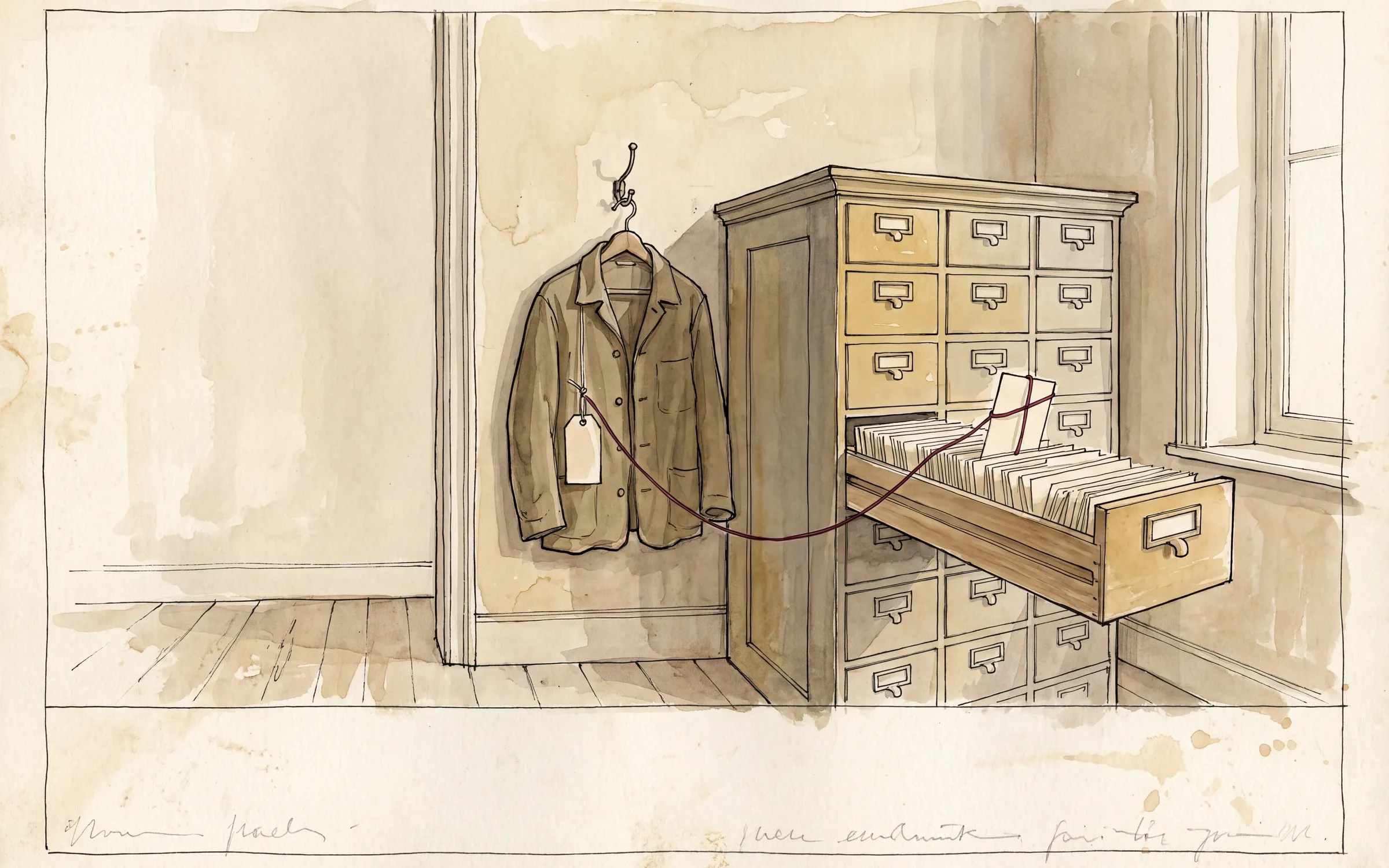
A fashion brand can know exactly how many black hoodies are in stock and still have almost none of the product data it may need for Europe’s next generation of traceability rules. The warehouse sees SKU, size, color and quantity. The future Digital Product Passport may need a much longer chain of information: product identity, fibre composition, supplier and operator details, compliance documents, care information, origin data and records that help downstream businesses repair, reuse or recycle the product.
That is why Digital Product Passport preparation for fashion is not mainly a QR-code project. For brands manufacturing in China, it is a supply-chain data project. The useful information often starts with the fabric mill and garment factory, then passes through quality control, labeling and the warehouse before a finished product ever reaches an EU customer.
The exact textile requirements are not final yet. But brands can still prepare sensibly now by organizing the data they already generate instead of waiting until every field is mandatory.
Quick Answer
- Textile apparel is an EU priority product group for future Digital Product Passport requirements under the Ecodesign for Sustainable Products Regulation (ESPR).
- The exact textile DPP data fields are still being developed; the European Commission currently indicates Q4 2027 for planned adoption of the textile delegated act.
- The DPP Registry and testing environment went live on 20 July 2026, showing that the wider technical infrastructure is already moving from policy into implementation.
- Fashion brands sourcing in China should start mapping where product identity, fibre composition, supplier, factory, certification, care and QC data actually comes from.
- The goal is not to guess future legal fields. It is to stop critical product information from living in scattered PDFs, WeChat messages, supplier spreadsheets and inboxes.
What Is a Digital Product Passport for Fashion?
Under the EU Ecodesign for Sustainable Products Regulation (ESPR), a Digital Product Passport is a set of product-specific data accessible electronically through a data carrier. The regulation sets the horizontal framework: a DPP is linked to a persistent unique product identifier, and the product-group delegated act determines what data must be included, whether the passport applies at model, batch or item level, who can access which data, and how long it must remain available.
For textile apparel, the European Commission says the DPP should be accessible online and through a data carrier on the product, such as a QR code. The Commission’s textile-apparel DPP guidance says future information may include product identification, fibre composition, origin information, relevant economic operators, and information supporting use, repair, reuse and recycling. The exact textile fields will be set later.
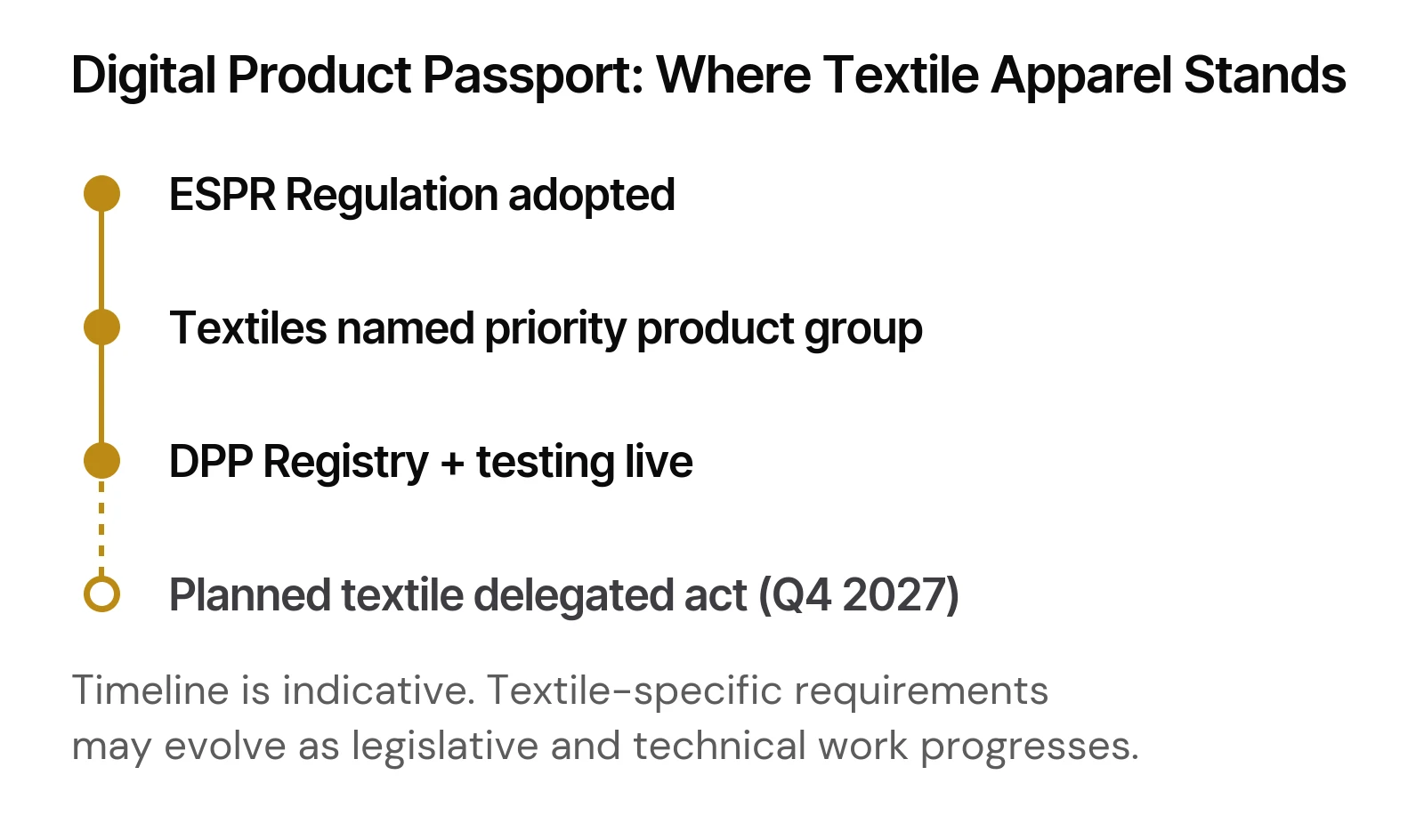
What Is Decided - and What Is Not - in 2026
The most important distinction for fashion founders is the difference between the DPP framework and the future textile-specific rule. The ESPR already establishes how the DPP system works at a high level. Textile apparel is already a priority product group. But brands should not treat every proposed textile data point as a current legal requirement.
The Commission’s current textile page gives an indicative implementation timeline of Q4 2027 for planned adoption of the ESPR delegated act for textiles, followed by additional guidance, technical specifications and implementation measures. The page also warns that the timeline may evolve.
At the same time, the technical system is becoming real. On 20 July 2026, the Commission announced that the Digital Product Passport Registry and testing environment were live. The Registry is designed to register unique product identifiers and associated metadata, while the full product data remains decentralized with the economic operator or service provider.
Why China Suppliers Become Part of the DPP Data Chain
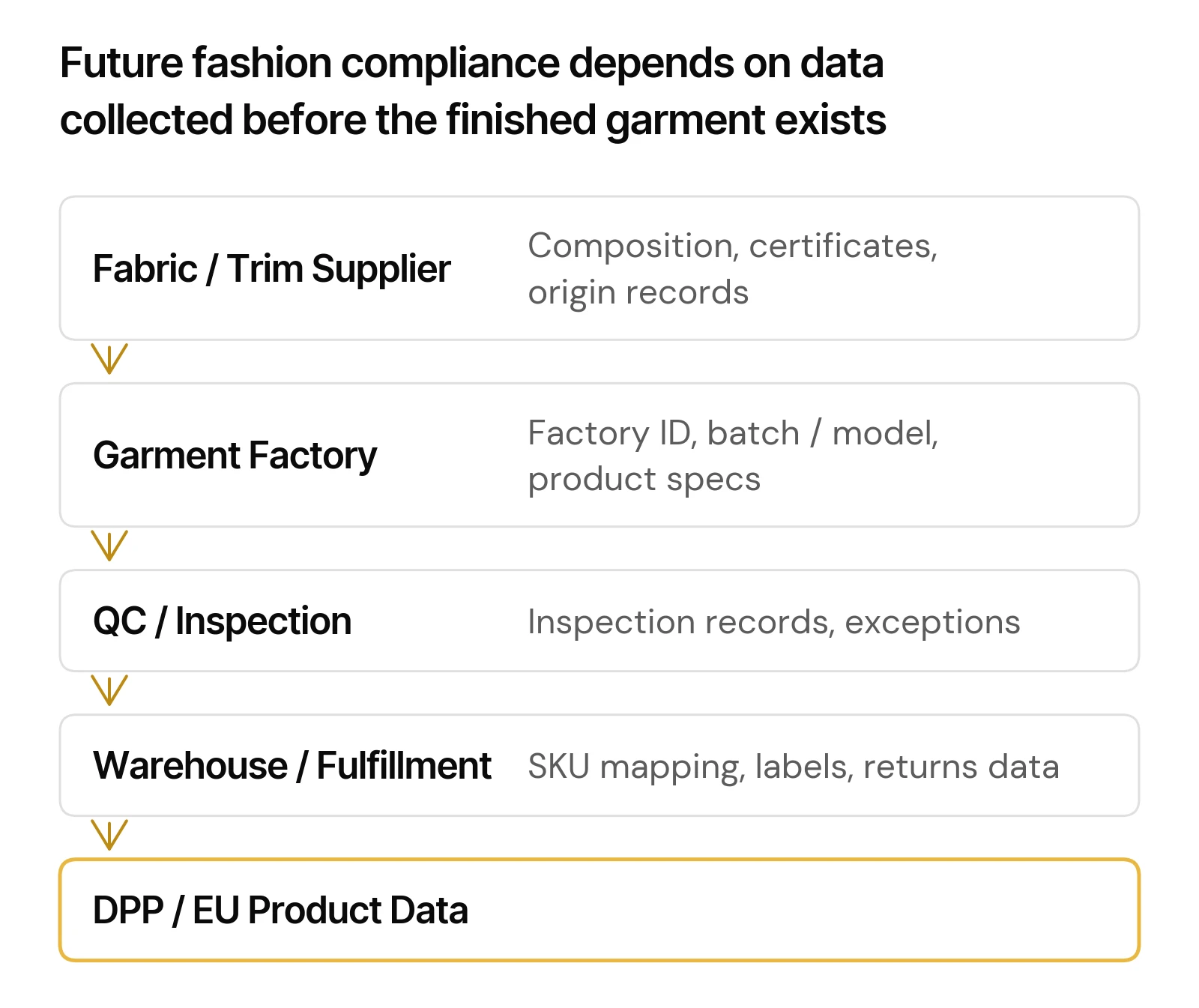
A finished garment does not create its own traceability record. Much of the useful information is generated upstream. Fibre composition comes from material specifications. Mill and supplier records may support origin or certification claims. The garment factory knows the production site, batch and manufacturing details. QC records show what was inspected before goods moved into inventory. The warehouse then connects the physical product to a SKU, label, order and destination.
That is why Silk Road’s positioning matters beyond shipping. Its fashion-focused services already connect factory sourcing, tech-pack review, sample management, MOQ negotiation, QC and fulfillment inside one Shenzhen-based operation. DPP preparation is easier when those handoffs are treated as one information chain rather than six unrelated vendors.
What Fashion Brands Can Start Collecting Now
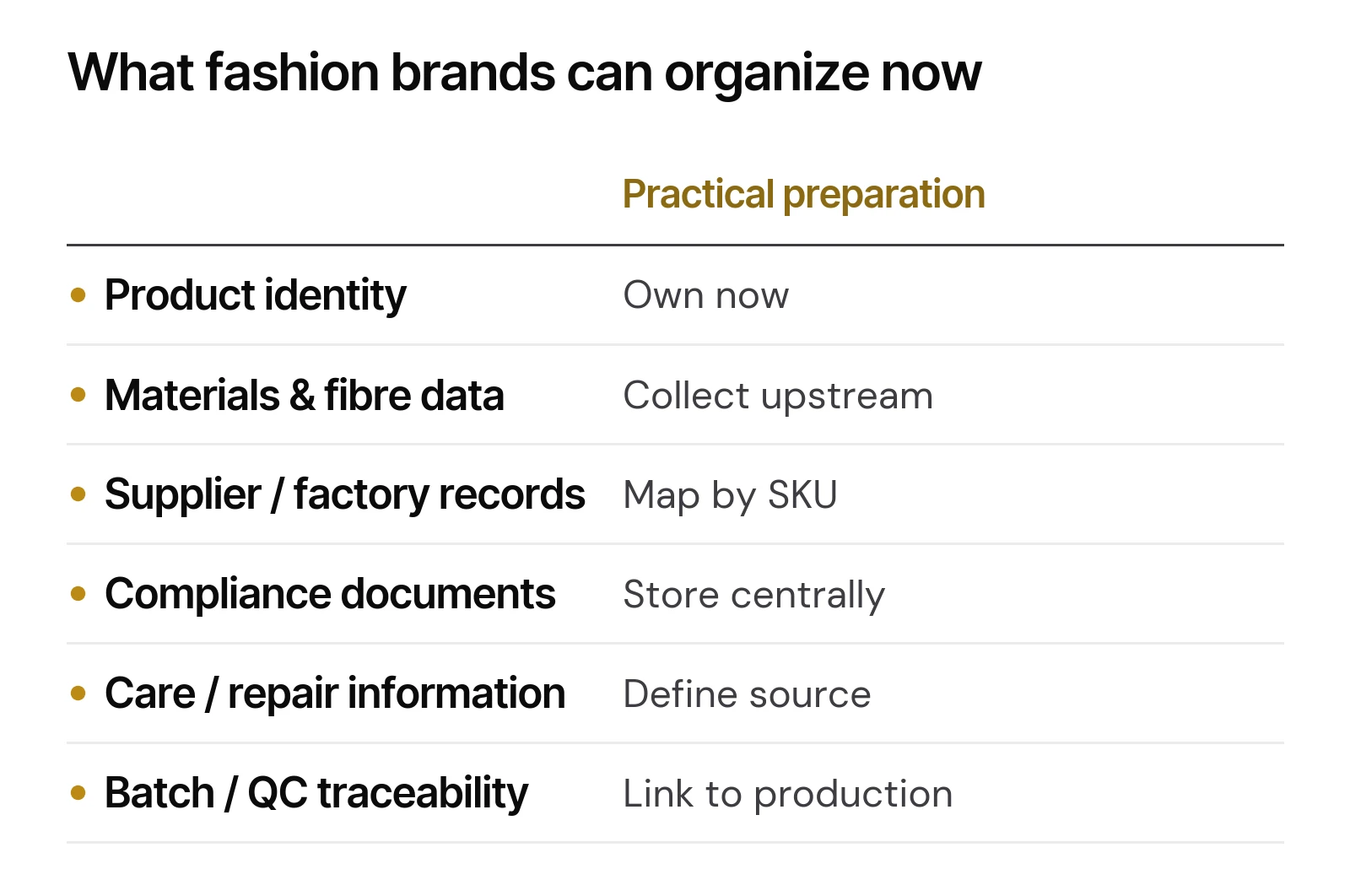
The smart preparation is not to invent a “2027 compliance spreadsheet” from guesses. It is to create a clean product-data foundation using information that already exists in normal fashion production. When the delegated act defines the final fields, the brand can map required fields onto organized records instead of chasing three-year-old suppliers for missing documents.
| Data area | Likely source | What to organize now |
|---|---|---|
| Product identity | Brand / product system | SKU, style, color, size, product identifier |
| Fibre composition | Fabric mill / supplier | Material specification and composition records |
| Supplier & factory | Sourcing / production | Legal entity, facility and contact records |
| Compliance | Brand / supplier | Certificates, declarations and technical documents |
| Care & use | Brand / factory | Care label, washing and maintenance instructions |
| Production traceability | Factory / QC | Batch, inspection, exceptions and approvals |
| Fulfillment mapping | Warehouse / WMS | SKU, label, inventory and shipment linkages |
Certificates Alone Are Not a Product Passport
A common mistake will be treating DPP preparation as a folder of supplier certificates. A certificate can support one claim, but it does not automatically connect the claim to the correct style, production lot or physical garment. A PDF saying a fabric meets a standard is much less useful if nobody can identify which purchase order, dye lot or SKU used that fabric.
The practical work is mapping evidence to the product. If a brand changes its cotton supplier for the second production run, the product record should preserve that distinction. If a bulk fabric composition changes, the approved sample and current production specification should not remain mixed together. If a certificate expires or applies only to one facility, the brand needs to know which products it actually supports.
Silk Road’s value-added sourcing and QC services are relevant here because inspection, supplier communication and production follow-up happen before inventory becomes a warehouse problem. The earlier a mismatch is documented, the cleaner the product record becomes downstream.
Why Variant and Batch Mapping Matters for Fashion
Fashion creates a traceability problem that generic product databases often underestimate. One hoodie design can have five sizes, four colors and two fabric treatments. That is 40 sellable variants before the brand adds a second season or supplier. The future textile delegated act will determine whether a DPP is required at model, batch or item level, but brands can prepare by making sure their current SKU and production records do not collapse those differences into one product name.
A fashion fulfillment operation already needs this discipline for inventory accuracy. Style, color, size, fit and collection have to remain distinct so the warehouse does not ship the wrong item. That same structured product identity is useful for traceability because it gives future DPP data something reliable to attach to.
From Factory to QC to Warehouse: Build One Record
A useful operating model is to treat every major handoff as a data checkpoint. When fabric is approved, store the material specification and supplier evidence. When bulk production starts, connect the factory and production batch. When QC is completed, store the inspection result against that batch. When goods arrive at the warehouse, map the physical cartons and SKUs back to those records.
Silk Road’s order fulfillment workflow already starts with factory or supplier inventory arriving directly into the fulfillment center, then being organized by SKU before orders ship. For a future DPP-ready workflow, the next layer is not changing how the garment moves. It is making sure the information that travelled with the garment is not lost at receiving.
For brands keeping primary stock close to production, Silk Road’s fulfillment-center model can also reduce handoff fragmentation: Shenzhen remains the main inventory hub, while regional stock is added only when demand justifies it.
The Commission’s new DPP information hub launched in July 2026 makes the direction clear: DPP implementation will roll out progressively by product group, and the available information will depend on each sector’s legislation. Fashion founders do not need to build the final system today, but they do need to know where their product data lives.
What Not to Do Yet
- Do not promise customers that a current QR code is an EU-compliant textile DPP unless the applicable requirements actually exist for that product.
- Do not assume a sustainability certificate automatically supplies every DPP field.
- Do not hard-code speculative textile requirements into expensive software before the delegated act and technical specifications are final.
- Do not wait until the rule is final to discover that key supplier and batch records were never retained.
The low-regret move is data hygiene: stable identifiers, supplier mapping, version-controlled product specifications, retained compliance evidence and production records that can be tied back to the product actually sold.
Frequently Asked Questions
Are Digital Product Passports mandatory for clothing in the EU now?
Not as a blanket textile-apparel requirement today. Textile apparel is a priority product group under ESPR, but the textile-specific requirements are still being developed. The European Commission currently indicates Q4 2027 for planned adoption of the textile delegated act, and implementation details will follow.
Will every garment need a QR code?
The Commission says the DPP will be accessible through a data carrier on the product, such as a QR code, and online. The final textile delegated act will determine the exact carrier, placement and product level requirements, so brands should avoid assuming the final format too early.
What should a fashion brand sourcing in China do first?
Map the existing data chain. Identify who owns material composition, supplier and factory information, production batch records, certifications, care information, QC results and SKU identifiers. Then store those records in a structured way that can be connected to products later.
Does a 3PL create the Digital Product Passport?
Not necessarily. Under the ESPR framework, responsibility sits with the relevant economic operator placing the product on the EU market, subject to the applicable product rules. A 3PL or supply-chain partner can still help preserve accurate SKU, batch, QC and fulfillment data that supports the wider traceability record.
Prepare the Data Before You Need the Passport
The Digital Product Passport is moving from policy into infrastructure, but textile-specific requirements are still being written. That gives fashion brands a useful window. Do not spend it guessing at final fields. Use it to clean up the information already moving through your supply chain: materials, suppliers, factories, batches, QC, care labels and SKU identities. For brands manufacturing in China, the strongest preparation is operational. When production, sourcing, inspection and fulfillment share a traceable record, future compliance becomes a mapping exercise instead of an emergency reconstruction project.